
What is nap consistency and why does it matter?
Nap consistency means offering naps at predictable times, using the same cues, and aligning the schedule with your child's developmental stage. It is not about watching the clock obsessively. It is about giving your child's brain and body the same reliable signals so sleep becomes something they anticipate rather than resist.
Consistent nap routines help infants' bodies anticipate sleep, which improves rest quality and behavioral outcomes. When naps happen at roughly the same time each day, your child's internal clock learns the pattern. That predictability reduces fussiness, shortens the time it takes to fall asleep, and supports steadier nighttime sleep as well.
Here is what regular, age-appropriate napping does for your child:
- Supports the body's natural circadian rhythm and homeostatic sleep drive
- Reduces nap resistance by making rest feel expected, not surprising
- Improves mood, focus, and emotional regulation during wake windows
- Protects nighttime sleep by preventing overtiredness
- Builds a foundation for healthy sleep habits through toddlerhood and beyond
How nap schedules change from birth through toddlerhood
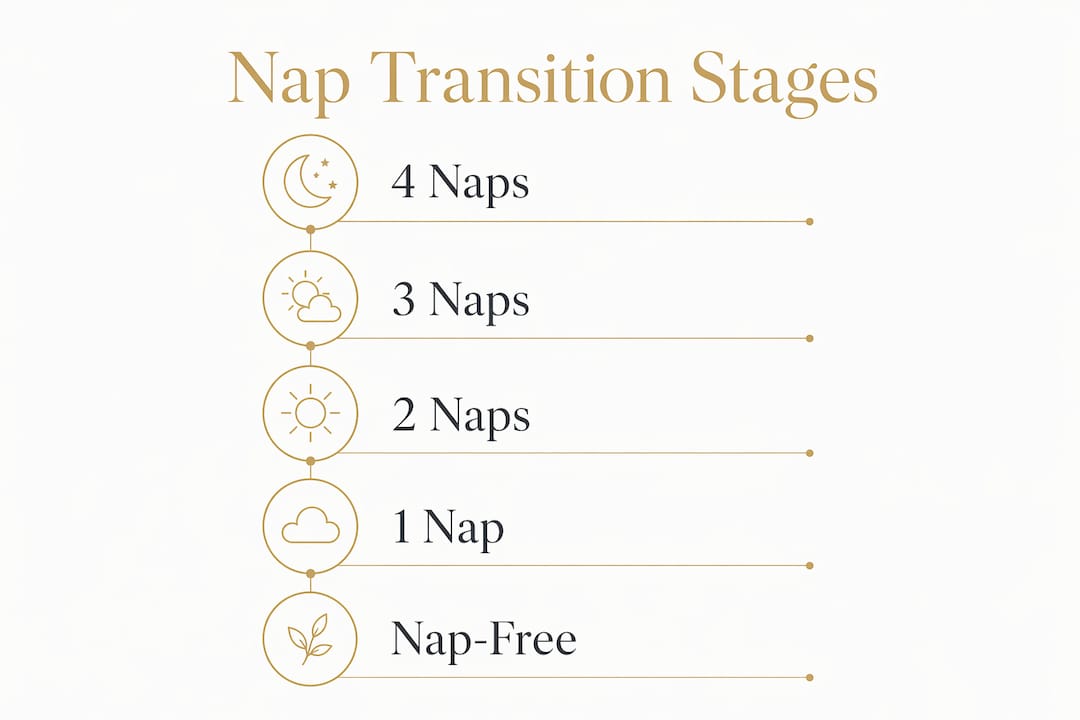
Your child's nap needs shift dramatically in the first few years. Newborns typically take 4–5 naps per day, dropping to about 3 by 4 months, then 2 by 7–8 months, and 1 by 13–18 months. Most children stop napping entirely by the time they reach early childhood.
Each of these shifts is a nap transition, and they come with a temporary rough patch. Transitions typically last 1–4 weeks depending on the child's age and temperament. You may see shorter naps, crankier afternoons, and earlier wake-ups during that window.
| Transition | Typical Age | Signs Your Child Is Ready | How Long It Takes |
|---|---|---|---|
| 4 naps to 3 | 3–4 months | Resisting the 4th nap, longer wake windows | 1–2 weeks |
| 3 naps to 2 | 6–8 months | Fighting the 3rd nap, bedtime pushed too late | 1–2 weeks |
| 2 naps to 1 | 13–18 months | Consistently refusing morning nap | 2–4 weeks |
| 1 nap to 0 | 3–5 years | Not falling asleep at nap, late bedtime push | Several weeks to months |
The 2-to-1 transition is widely considered the hardest for caregivers. Many children flirt with one nap for weeks before they are truly ready to drop the second one. Avoid rushing this shift — a child who occasionally skips a morning nap may still need two naps for several more weeks.
Pro Tip: If your child takes a long morning nap and a short afternoon nap, try capping the morning nap. That preserves enough sleep pressure to make the afternoon nap work.
What environment helps your child nap better?
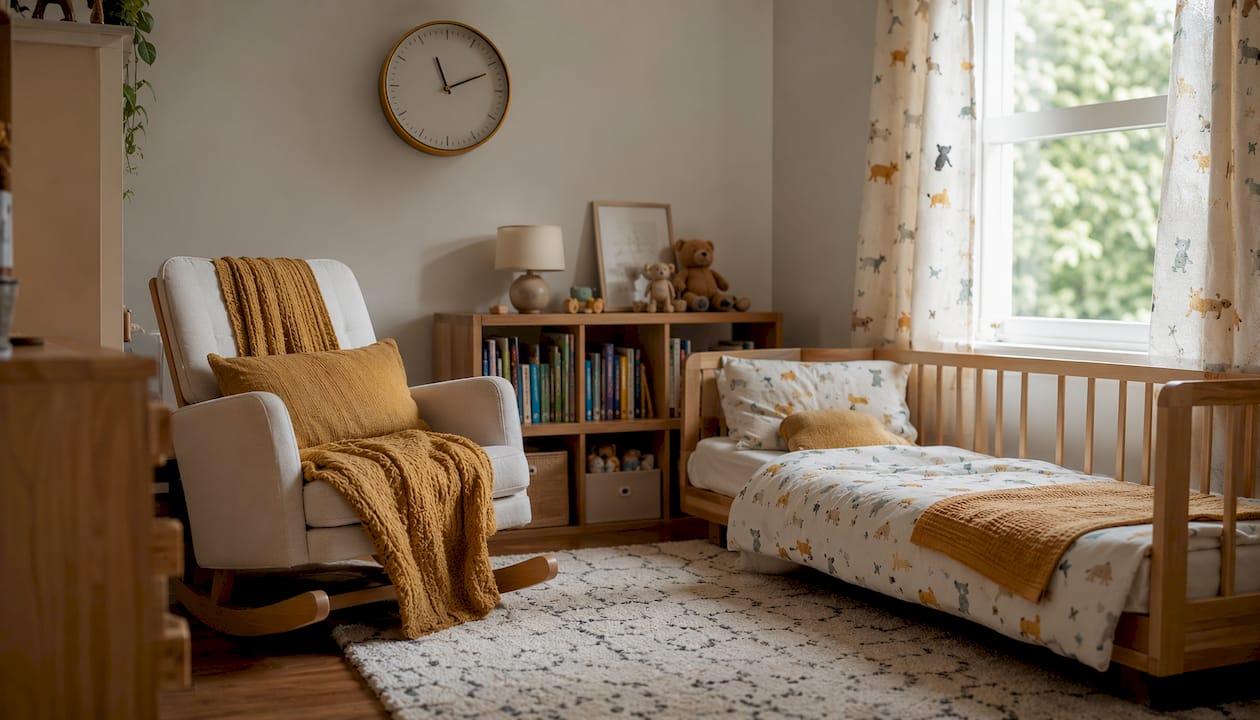
The right sleep environment makes a real difference, especially during the day when competing stimuli are everywhere. A few adjustments to the room can cut the time it takes your child to fall asleep and help them stay asleep longer.
- Cool temperature: A child's body temperature is naturally higher in the afternoon, making daytime sleep harder. A cooler room mimics the conditions the nervous system associates with nighttime rest.
- Darkened room: Blackout curtains block the light cues that signal wakefulness. This is especially useful for early afternoon naps when sunlight is strongest.
- White noise: Consistent background sound masks household noise and creates an auditory cue the brain connects with sleep.
- Consistent location: Napping in the same spot each time reinforces the association between that space and rest.
Replicating nighttime conditions during naps is one of the most practical things you can do. The brain does not distinguish between day and night based on the clock alone. It responds to environmental cues, and you control those.
Pro Tip: A short pre-nap routine of 5–10 minutes, closing the curtains, turning on white noise, and reading one short book, creates a reliable signal that sleep is coming. Keep it simple so any caregiver can repeat it exactly.
Practical tips for building and keeping a consistent nap routine
Building a predictable nap routine is less about rigid timing and more about repeatable cues your child learns to recognize. Here is what works in practice:
- Track sleep for 3–5 days. A simple sleep log noting wake times, nap durations, and your child's mood reveals patterns you would otherwise miss. It also tells you whether an issue is overtiredness, undertiredness, or an approaching transition.
- Use wake windows, not just the clock. Watching how long your child has been awake is often more reliable than a fixed nap time, especially under 6 months.
- Stay calm during nap refusal. Resistance does not always mean your child is ready to drop a nap. Illness, teething, and developmental leaps all cause temporary pushback.
- Keep the pre-nap sequence the same every time. The order of steps matters as much as the steps themselves. Predictability is the point.
- Coordinate with all caregivers. Partner consistency reduces resistance and cuts the emotional load on everyone. When grandparents, daycare staff, and both parents follow the same approach, your child gets the same signal no matter who puts them down.
Nap training takes patience. Expect a few weeks of adjustment when you introduce a new routine, and resist the urge to abandon it after one hard day.
What sleep experts say about nap consistency and transitions
Pediatric sleep science consistently points to one principle: predictability is the mechanism. When a child receives the same cues at roughly the same times, their brain learns to shift into rest mode without a fight.
Most experts recommend establishing solid nighttime sleep first, then working on naps. Nights are easier because the homeostatic sleep drive is stronger after a full day of wakefulness. Once nights are stable, nap training tends to go faster.
Short naps under 45 minutes are developmentally normal for babies under 5 months. Their sleep cycles run about 30–45 minutes, and they have not yet learned to connect cycles. This improves naturally with age as the brain matures.
Sample nap routine templates by age group
These templates give you a starting framework. Adjust the timing by 30–60 minutes based on your child's actual wake windows and mood.
Newborn (0–3 months) Wake, feed, brief awake time (45–60 minutes), nap. Repeat 4–5 times across the day. No set schedule yet; follow hunger and sleepy cues.
4–6 months (3 naps)
- Morning nap: 1.5–2 hours after wake-up
- Midday nap: roughly 3 hours after morning nap ends
- Late afternoon catnap: 30–45 minutes, ending by 5:00 PM
- Bedtime: 7:00–8:00 PM
7–12 months (2 naps)
- Morning nap: 2.5–3 hours after wake-up
- Afternoon nap: 3 hours after morning nap ends
- Bedtime: 7:00–7:30 PM
13–18 months (transitioning to 1 nap)
- Single midday nap: 11:30 AM–12:30 PM start, aiming for 1.5–2 hours
- Bedtime: 7:00 PM, slightly earlier on days the nap runs short
18 months to 3 years (1 nap)
- Nap: 12:30–1:00 PM start, 1–2 hours
- Bedtime: 7:00–8:00 PM
For older toddlers, napping between 1:00 PM and 3:00 PM keeps daytime rest from interfering with nighttime sleep. Naps that run past 3:30 PM tend to push bedtime later and erode overnight sleep quality.
Signs your child is ready for a nap schedule change
Knowing when to adjust the schedule is just as useful as knowing how to hold it steady. Watch for these signals over several days, not just one or two.
Signs it may be time to drop a nap or shift timing:
- Consistently taking 30 or more minutes to fall asleep at nap time
- Nap refusal on most days for two or more weeks straight
- Bedtime battles that were not there before, suggesting the daytime sleep total is too high
- Waking up from naps happy and full of energy rather than groggy
- Nighttime sleep stretching longer without a nap, rather than shorter
Signs your child still needs the current schedule:
- Falling asleep in the car or stroller at the usual nap time
- Crankiness or meltdowns in the late afternoon on days a nap was skipped
- Nighttime sleep becoming fragmented or earlier wake-ups appearing
One skipped nap is not a signal. A consistent pattern over 10–14 days usually is. Tracking sleep in a simple log during this window makes the pattern clear and takes the guesswork out of the decision.
Key Takeaways
Nap consistency works because predictable cues, age-appropriate timing, and a sleep-friendly environment give your child's brain the signals it needs to rest without resistance.
| Point | Details |
|---|---|
| Age-appropriate nap counts | Newborns need 4–5 naps; by 13–18 months, most children are down to one. |
| Transitions take time | Most nap transitions last 1–4 weeks; the 2-to-1 shift is the hardest for caregivers. |
| Environment matters | A cool, dark room with white noise replicates nighttime conditions and speeds sleep onset. |
| Pre-nap routine is the cue | A consistent 5–10 minute sequence teaches the brain that sleep is coming. |
| Track before you change | Three to five days of sleep logs reveal whether a schedule change is actually needed. |
Your Indiana business deserves the same consistency
Just as a reliable nap routine builds trust with your child's developing brain, a consistent, well-built online presence builds trust with your customers. If your website is slow, outdated, or hard to find in local search, you are losing people before they ever call.

Kirk-co builds fully hand-coded websites for Indiana businesses, with local SEO built in from the ground up. No templates, no shortcuts. If you want a site that loads fast, ranks locally, and actually converts visitors into customers, see what we build for businesses right here in Indiana.