
Pick a name that's 6 to 14 characters, easy to say out loud without spelling it, and free of hyphens or numbers. Grab the matching .com if it's available. Everything else, trademark checks, registrar settings, and how to score your finalists, matters, but that's the rule that decides whether a name is even worth checking.
TL;DR:
- Choosing a domain name should prioritize clarity and simplicity, with a focus on a length of six to 14 characters to ensure memorability and ease of spelling.
- Running legal checks through the USPTO and your state's business registry before purchasing helps prevent conflicts that could lead to lawsuits or reduced discoverability.
- The
.comextension remains the most trusted and by default the safest choice, while other extensions should be reserved for specific niches or tech audiences.- Use transparent registrars that offer auto-renew, WHOIS privacy, and lock features to protect your domain and avoid accidental expiration.
- A short, distinctive name that passes the radio test and scores well on memorability and trademark risk is more likely to succeed long-term than a descriptive, keyword-heavy domain.
Table of Contents
- How Do I Choose a Domain Name for My Business?
- How Do You Brainstorm and Narrow Down Domain Names?
- What Legal Checks Should You Run Before Buying?
- Which Domain Extension Should You Choose?
- How Do You Score and Finalize Your Domain Choice?
- A Straight Answer for Small Service Businesses
- Ready to Register, Build, and Launch?
- Where to Run These Checks Yourself
- Sources
- FAQ
How Do I Choose a Domain Name for My Business?
Run these eight checks on every candidate before you buy. You'll eliminate most of your list in minutes.
- Say it out loud to a stranger. If they can't repeat or spell it back correctly, it fails the radio test.
- Keep it between 6 and 14 characters. That's the sweet spot for typing accuracy and recall, according to GoDaddy.
- Cut hyphens and numbers. They cause spoken confusion (is it "5" or "five"?) and read as less professional.
- Chase a clean
.comfirst. It's still the default extension buyers expect, per BigCommerce. - Search USPTO and your state business registry. A federal trademark or an active state filing on a similar name can shut down your plans later.
- Check domain history and social handles. A name with a spam past or zero matching handles creates work you don't need.
- Vet the registrar. Look for transparent renewal pricing and no bait-and-switch fees.
- Lock in security settings. Multi-year registration, auto-renew, and WHOIS privacy protect you from losing the name by accident.
How Do You Brainstorm and Narrow Down Domain Names?
Naming your business online is a filtering problem, not a creative-writing contest. You're not trying to write the cleverest name. You're trying to find the shortest list of names that are easy to hear, type, and remember, then eliminating everything that doesn't survive contact with a real person's ear.
Here's a process that gets you from blank page to shortlist in under an hour:
- Define the job first. Who's searching for you, what category are they searching in, and does the name need to work in one town or across a wider market?
- Brainstorm in four lanes. Try descriptive names (what you do), metaphorical names (a feeling or image), combined words (two short words mashed together), and modifier names (get, try, or go plus a root word).
- Write down 20 to 30 candidates before you judge any of them. Quantity first, quality filter second.
- Run the radio test on each survivor. Say it to someone who's never seen it spelled. If they hesitate or guess wrong, cross it off.
- Use a domain generator or availability checker as a filter, not a source. These tools are fine for confirming what's open, but human judgment beats automated suggestions every time on tone and fit.
For most local service businesses, a short brandable name (think one or two invented or combined syllables) outperforms a long descriptive one packed with keywords. Descriptive names can help niche or highly technical audiences find you faster, but they age poorly if you expand your services.
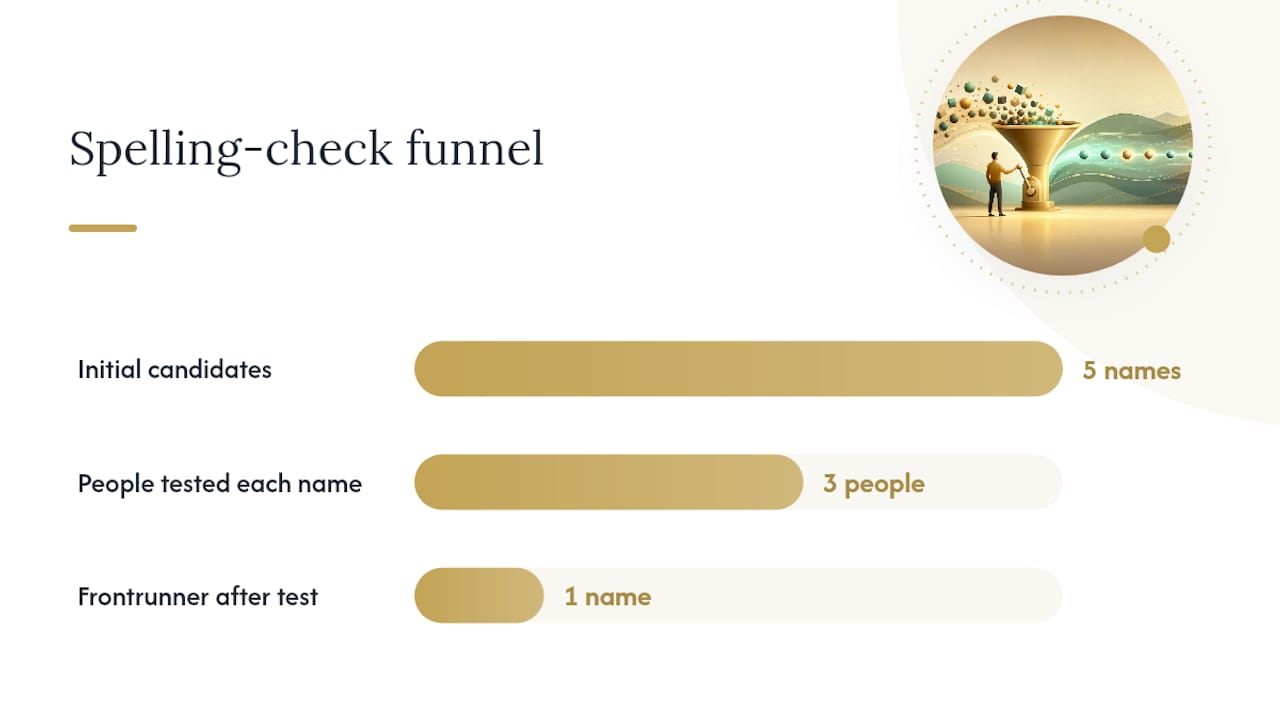
Pro Tip: Text your top five names to three people who know nothing about your project and ask them to spell what they heard. Whichever name gets spelled correctly by all three is your frontrunner.
What Legal Checks Should You Run Before Buying?
A name you love isn't worth much if someone else already owns the rights to it. Before you commit, run these checks:
- Search the USPTO trademark database for exact and phonetically similar marks in your category.
- Check your state's business registry, not just the federal trademark system. Your domain doesn't need to match your legal business name, but an active state filing on a nearly identical brand can still cause conflicts or confusion.
- Look up the domain's history using the Wayback Machine and a WHOIS history lookup. A domain that once hosted spam, adult content, or a defunct business can drag down your search rankings before you've published a single page.
- Confirm matching social handles are open. If the domain is free but every social platform already has that exact handle taken by an unrelated brand, you'll be fighting an uphill branding battle from day one, a point worth weighing alongside broader brand consistency guidance for growing businesses.
Skipping these steps doesn't just risk a lawsuit. It risks discoverability, since a name that's already associated with another active brand splits your search traffic and your word-of-mouth referrals.
Which Domain Extension Should You Choose?
.com remains the default for a reason: most people type it automatically, even when your marketing says otherwise. Reserve alternatives like .co or .io for niche tech projects where your audience already expects them, and even then, check whether the matching .com is taken by a competing business before you settle.
Registrar choice matters just as much as the extension:
- Pick a registrar with transparent, published pricing. Some advertise a low first-year rate, then double or triple it at renewal.
- Read renewal and transfer policies before you buy, not after.
- Turn on multi-year registration. Locking in two to five years reduces the odds of accidental expiration, and expired domains can be claimed by speculators within hours.
- Enable WHOIS privacy, auto-renew, and registrar lock the day you register, not months later.
If your ideal name is already taken, a domain broker can sometimes negotiate a purchase, but premium resale prices routinely run into the thousands. For most new businesses, walking away and picking a strong second choice is the smarter financial move.
How Do You Score and Finalize Your Domain Choice?
Once you've got three to five finalists that passed the checklist, score each one on the factors that actually predict long-term success.
| Criteria | What to check | Weight |
|---|---|---|
| Radio test clarity | Can someone spell it correctly after hearing it once? | High |
| Memorability | Does it stick after one exposure? | High |
| Distinctiveness | Does it stand apart from competitors in your search results? | Medium |
| Trademark risk | Clear on USPTO and state registry searches? | High |
| Extension fit | Is .com available, or is the alternative appropriate for your audience? | Medium |
| Total cost | Registration, renewal rate, and any premium markup | Medium |
A name that scores well on radio test clarity, memorability, and trademark risk is safe to register immediately, even if the extension or cost score is only average. A name that stumbles on the radio test or shows any trademark conflict should be dropped, no matter how much you like it.
Once you've registered your winner, handle these immediately: turn on auto-renew and WHOIS privacy, point your DNS to your hosting provider, set up a matching business email address, and consider registering the same name in one or two adjacent extensions defensively.
A Straight Answer for Small Service Businesses
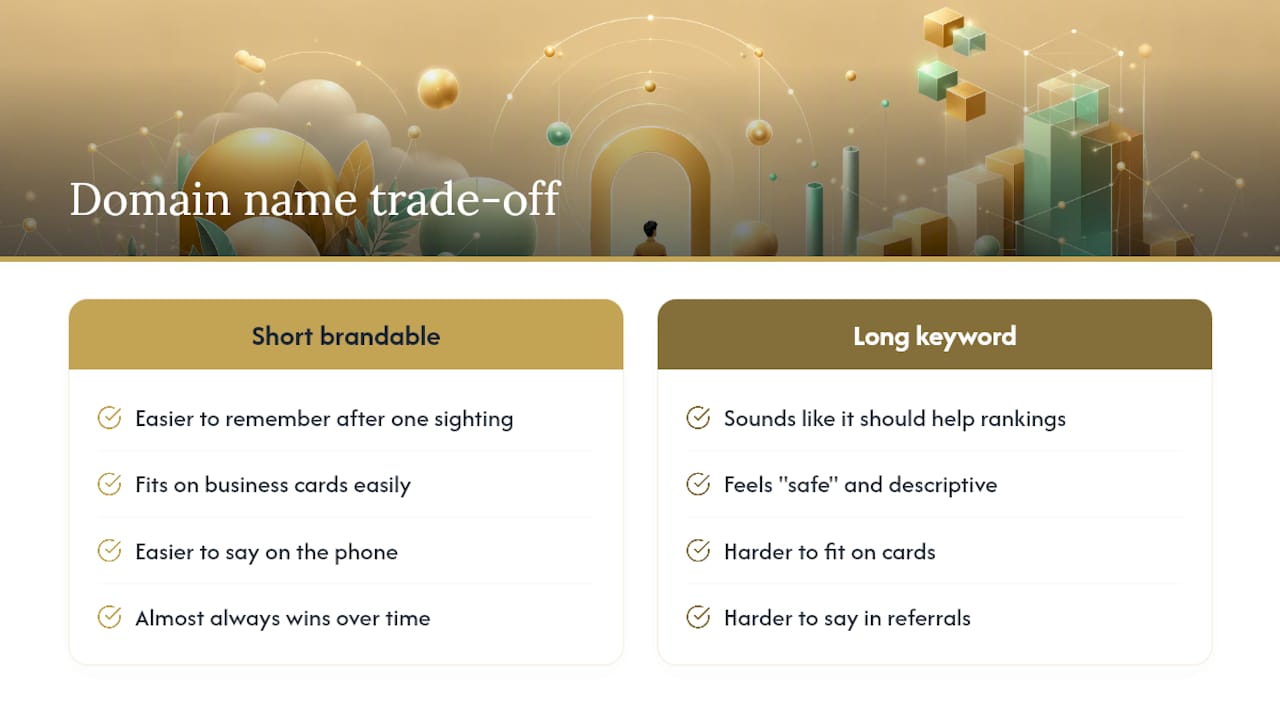
Long, keyword-stuffed domains sound like they should help search rankings, but for local service businesses, a short brandable name almost always wins over time. It's easier for a customer to remember after seeing your truck once, easier to put on a business card, and easier to say when a happy client is recommending you by phone.
We've walked local clients through this same trade-off more than once: the name that felt "safe" because it described the service exactly often lost out to a shorter, more distinctive option once we ran it through the radio test. If you're stuck deciding, don't overthink it. Pick your top two names, run them through the checklist above, and register the one that survives.
— Elijah
Ready to Register, Build, and Launch?
Picking the name is the first decision. Getting the domain registered correctly, the site built, and the whole thing live without technical headaches is the next one, and that's where a dedicated web design and domain registration service can help. Such a service can manage domain registration, DNS setup, and custom site builds under one roof, so you're not stuck troubleshooting WHOIS settings or hosting configs on your own.

Our Starter Business Manager plan runs $49 per month and bundles hosting, maintenance, and local SEO with your new site, while Business Manager Premium at $79 per month adds a deeper level of ongoing support. Both are built for contractors, retailers, and service businesses across Indiana who want the domain, the site, and the launch handled without chasing three separate logins. Check out our small business web design services or view current pricing to get started this week.
Where to Run These Checks Yourself
Use the USPTO trademark database and your state's business registry to clear legal conflicts before you buy. Check registrar guidance from GoDaddy for account security settings, and use the Wayback Machine or a WHOIS history tool to inspect a domain's past before committing to it.
Sources
- GoDaddy: What is a .com domain
- ExpiredDomains knowledgebase: the radio test
- SBA: Launch your business — choose your business name
- BigCommerce: How to name a business
- Wix: How long should a domain name be
FAQ
How Long Should a Business Domain Name Be?
Aim for 6 to 14 characters, the range GoDaddy recommends for balancing memorability with ease of typing. Shorter names also tend to pass the radio test more reliably since there's less room for spelling confusion.
Should My Domain Match My Legal Business Name?
No, your domain doesn't have to match your legal business name or DBA exactly. The SBA recommends checking USPTO and state registries first so the name you choose doesn't conflict with an existing trademark or active business filing.
Is .com Still Better Than Other Extensions?
Yes, for most businesses. A .com is what customers type by habit, and BigCommerce's naming guidance notes that alternatives like .co or .io work best for niche tech audiences already comfortable with them.
What Does Kirk & Co Software Charge for a Website Plan?
The Starter Business Manager plan is $49 per month, and Business Manager Premium is $79 per month, both listed on the pricing page. Both plans include hosting, maintenance, and local SEO alongside the site build.
Why Should I Avoid Hyphens and Numbers in a Domain?
Hyphens and numbers create ambiguity when a name is spoken aloud, since listeners often can't tell if a number should be typed as digits or spelled out. This confusion lowers perceived professionalism and costs you traffic from people who mistype the address.